Loiyangalani comes alive as Marsabit hosts 14th Lake Turkana cultural festival
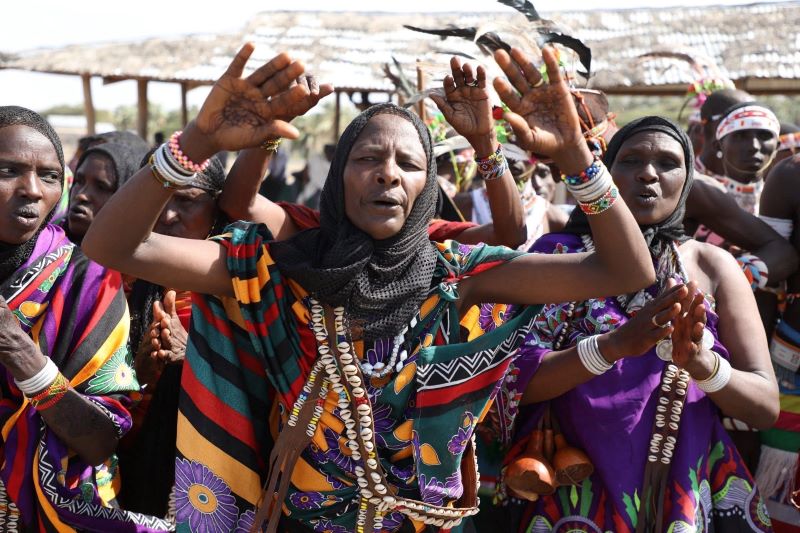
Visitors are treated to vibrant displays of cultural villages, traditional dances, hand-crafted beadwork, camel regalia, storytelling tents, and craft markets, each a reflection of the county's unmatched diversity.
Loiyangalani town has once again erupted into a spectacle of colour, rhythm and heritage as thousands of residents, cultural troupes and visitors flocked to the shores of the famed Jade Sea for the 14th Edition of the Marsabit Lake Turkana Cultural Festival.
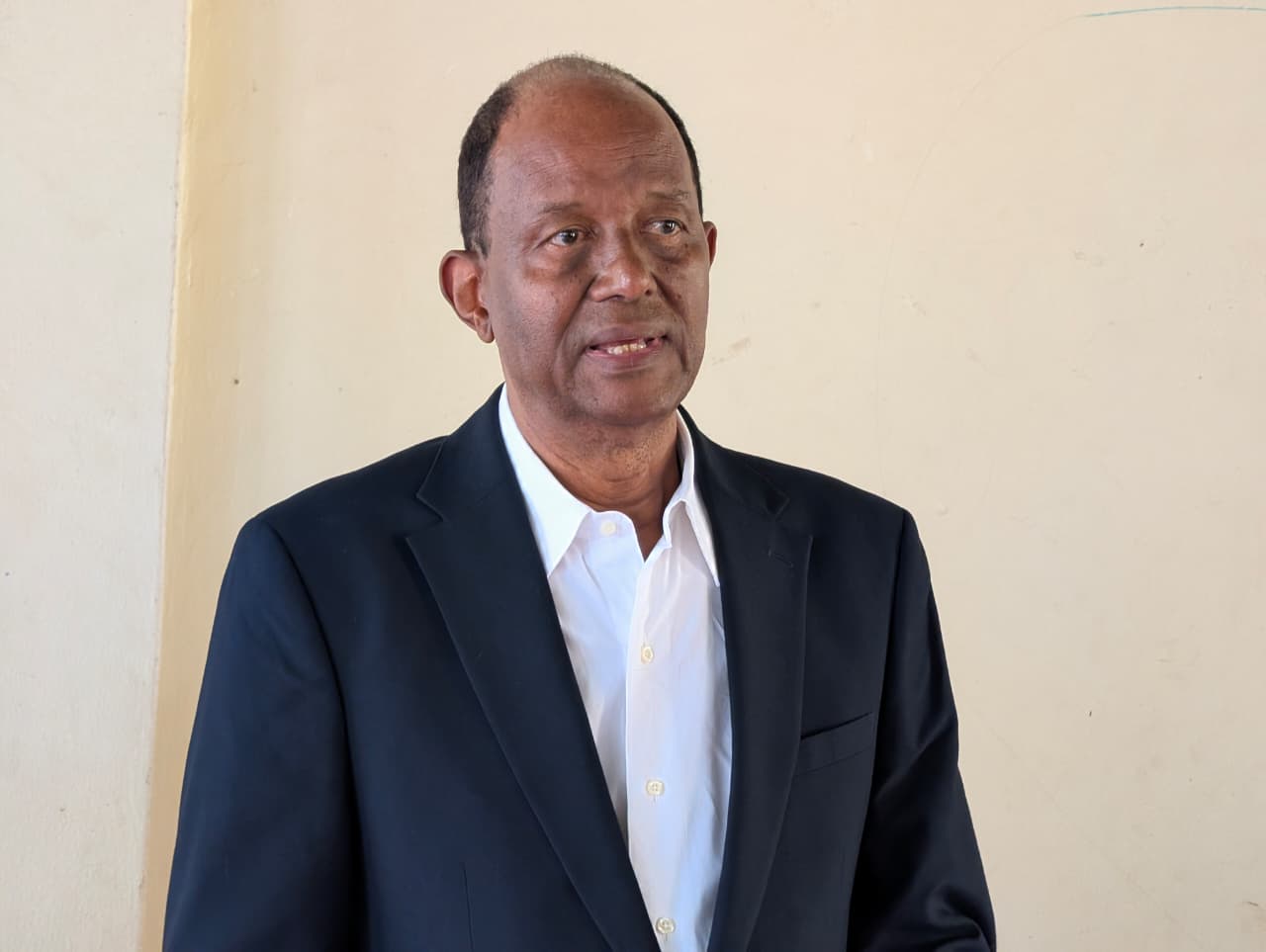
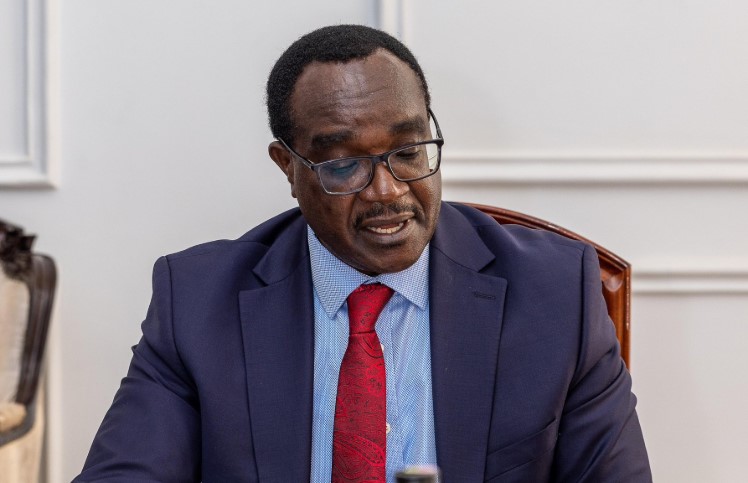
The annual festival, now one of Kenya's most iconic cultural events, was officially opened by Marsabit Governor Mohamud Mohamed Ali, who delivered a powerful call for unity, peace and shared prosperity anchored in the county's rich cultural identity.
More To Read
"This festival is not just an event, it is a living testimony of who we are as a people," Governor Mohamud said. "Here in Loiyangalani, we do not just tolerate our differences; we dance them, we sing them, we wear them with pride, and we pass them on to our children."
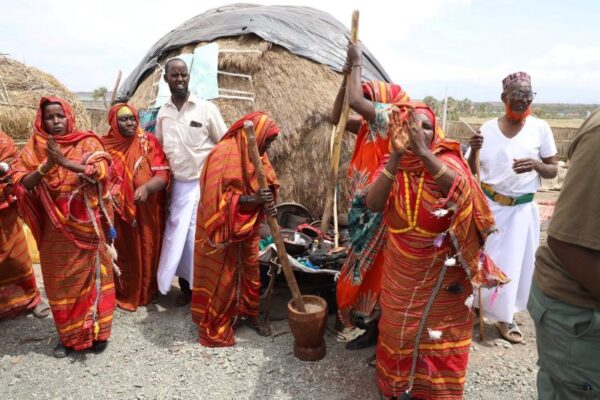 Various communities in Marsabit display their cultural heritage and tradition. (Handout)
What began in 2008 as the ELMOSARETU cultural initiative, bringing together the Elmolo, Samburu, Rendille and Turkana communities, has since grown into Kenya's pioneering and flagship cultural festival. Today, all 14 communities of Marsabit participate, transforming Loiyangalani into a vast open-air cultural museum.
The Governor described the festival's 2025 theme—"Celebrating Our Cultural Heritage, Rising in Unity: Strengthening Partnerships for Peace and Prosperity"—as both timely and symbolic.
"It speaks to three truths about us. That culture is our identity, that unity is our strength, and that partnerships are our pathway," he said.
Loiyangalani, perched dramatically on the shoreline of Lake Turkana, has once again reaffirmed its status as one of Africa's most striking cultural settings.
"Loiyangalani is a miracle of geography," the Governor told the crowd. "A place where the desert meets the lake, where the wind, the waves and the wilderness conspire to create one of the most dramatic landscapes in Africa."
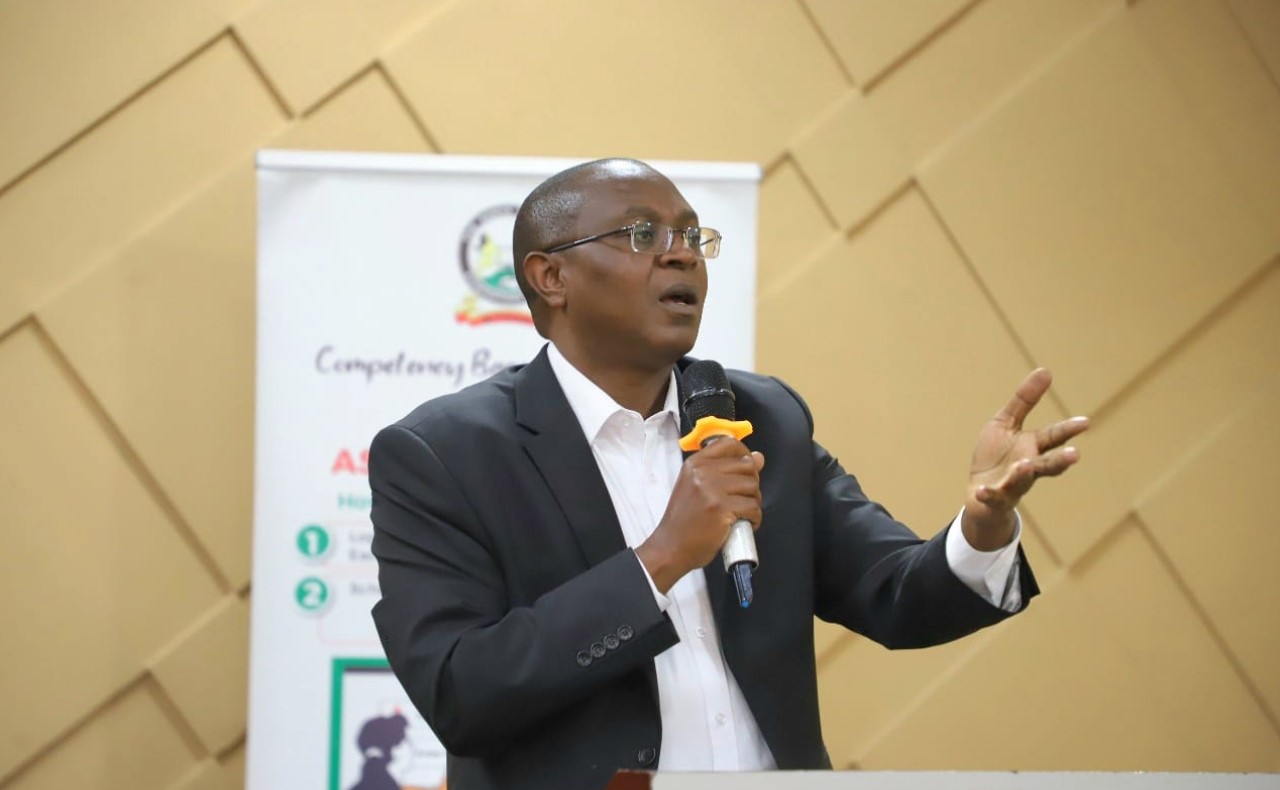
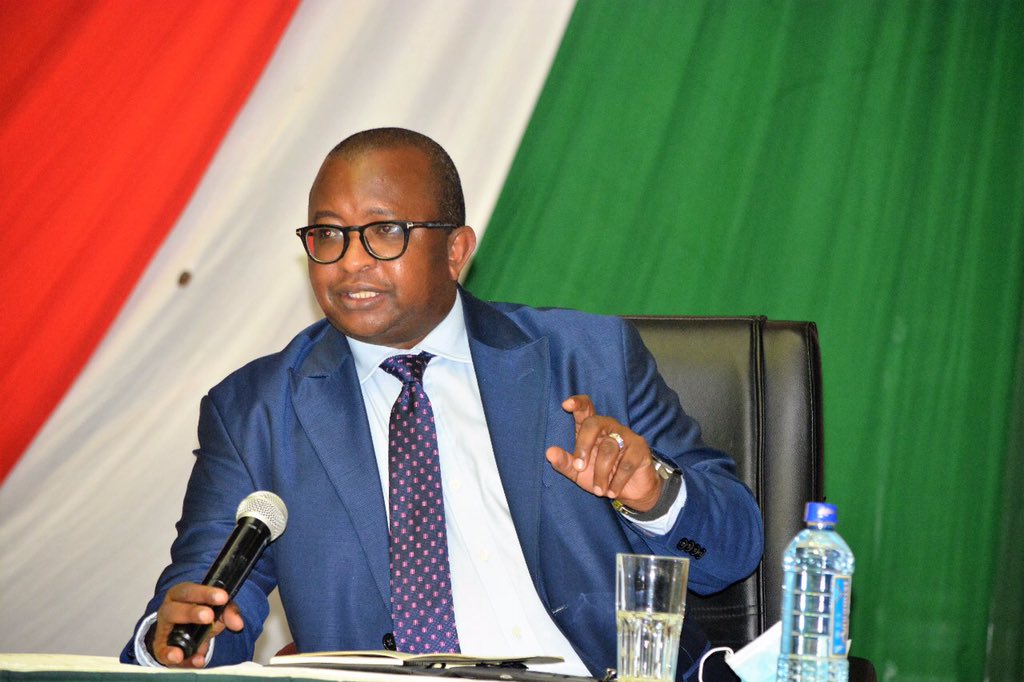
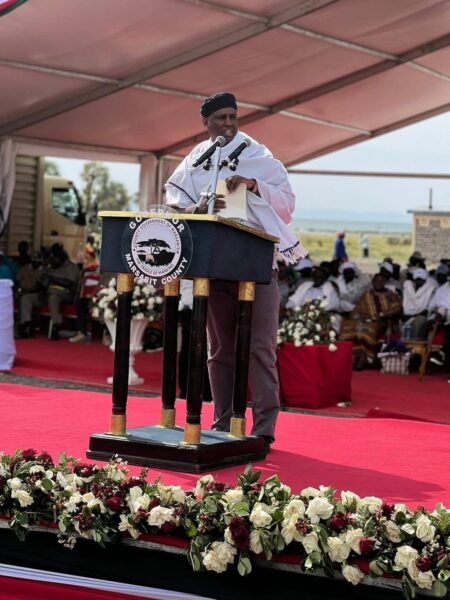 Marsabit Governor Mohamud Mohamed Ali addressing residents during the 14th edition of Marsabit Lake Turkana Cultural Festival. (Handout)
Visitors are treated to vibrant displays of cultural villages, traditional dances, hand-crafted beadwork, camel regalia, storytelling tents, and craft markets, each a reflection of the county's unmatched diversity.
Lake Turkana itself, stretching more than 250 kilometres, and home to the world's largest crocodile population, remains a centrepiece of fascination. Nearby lie the Central and South Island National Parks, as well as Sibiloi National Park and the globally renowned Koobi Fora fossil site, which earned Marsabit the historic title "Cradle of Mankind."
Marsabit's long history of inter-ethnic conflict was not lost on Governor Mohamud, who acknowledged the county's painful past while celebrating its determination to move forward.
"We do not deny that history, we face it honestly," he said. "But through this festival, we have chosen a different path: dialogue instead of division, bridges instead of barriers. In this festival, the logic of the gun gives way to the language of the drum."
Beyond peace and symbolism, the festival has become a major economic engine for Marsabit, boosting eco-tourism, creating jobs and opening doors for local artisans, women's groups, youth performers and transport providers.
Other Topics To Read
- Northern Kenya
- Lake Turkana Cultural Festival
- Loiyangalani
- Mohamud Mohamed Ali
- Jade Sea
- Marsabit Lake Turkana Cultural Festival
- Mohamed Mohamud Ali
- Marsabit cultural festival
- Loiyangalani Kenya
- Marsabit tourism
- inter-ethnic peace Kenya
- ELMOSARETU initiative
- Loiyangalani comes alive as Marsabit hosts 14th Lake Turkana cultural festival
- Headlines
"Every bead sold, every song performed, every taxi hired, every photo shared, all these ripple into livelihoods improved, school fees paid, and hope renewed," the Governor noted.
Key partners supporting the festival include the National Government, Lake Turkana Wind Power Project (LTWP), KenGen, National Museums of Kenya, Kenya Wildlife Service, Kenya Tourism Board, UN agencies and several NGOs and private sector actors.
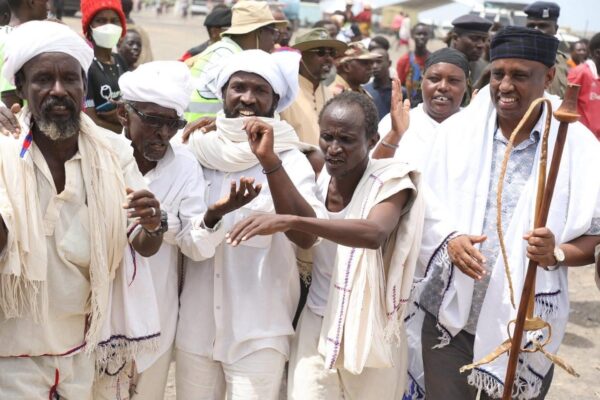 Governor Mohamud Mohamed Ali and other guests in traditional regalia join traditional dancers. (Handout)
The Governor paid glowing tribute to community elders, describing them as "the archives of our wisdom and the peacemakers on whose shoulders we stand."
To the youth, he issued a challenge: "This is your inheritance. Guard it jealously. Use your talents to tell the story of a modern, confident, united Marsabit."
As the festival kicks off, Loiyangalani is expected to host thousands more in the coming days, each bringing their own story, each leaving with a new appreciation of Marsabit's cultural wealth.
"Let the songs we hear and the dances we watch not just entertain us but transform us. Let this festival renew our commitment to peace, unity and shared prosperity," Mohamud said.
According to Marsabit Women Rep Naomi Waqo, the event is more than a celebration. "It is a living reminder of who we are: diverse, resilient, and united in purpose," she said.
She expressed her gratitude to elders, youth, partners and all who make the festival a symbol of unity and hope for the county.
The event was also graced by the revered Borana king Abba Gada from Ethiopia, among other guests.
Top Stories Today